Stair Edge Demarcation in Heritage Buildings: University of Greenwich
Case Study
PROJECT: University of Greenwich
LOCATION: Greenwich, London, UK
SECTOR: Higher Education / Heritage
APPLICATION: Stair safety, tactile demarcation & slip resistance
MANUFACTURER: Studmarc
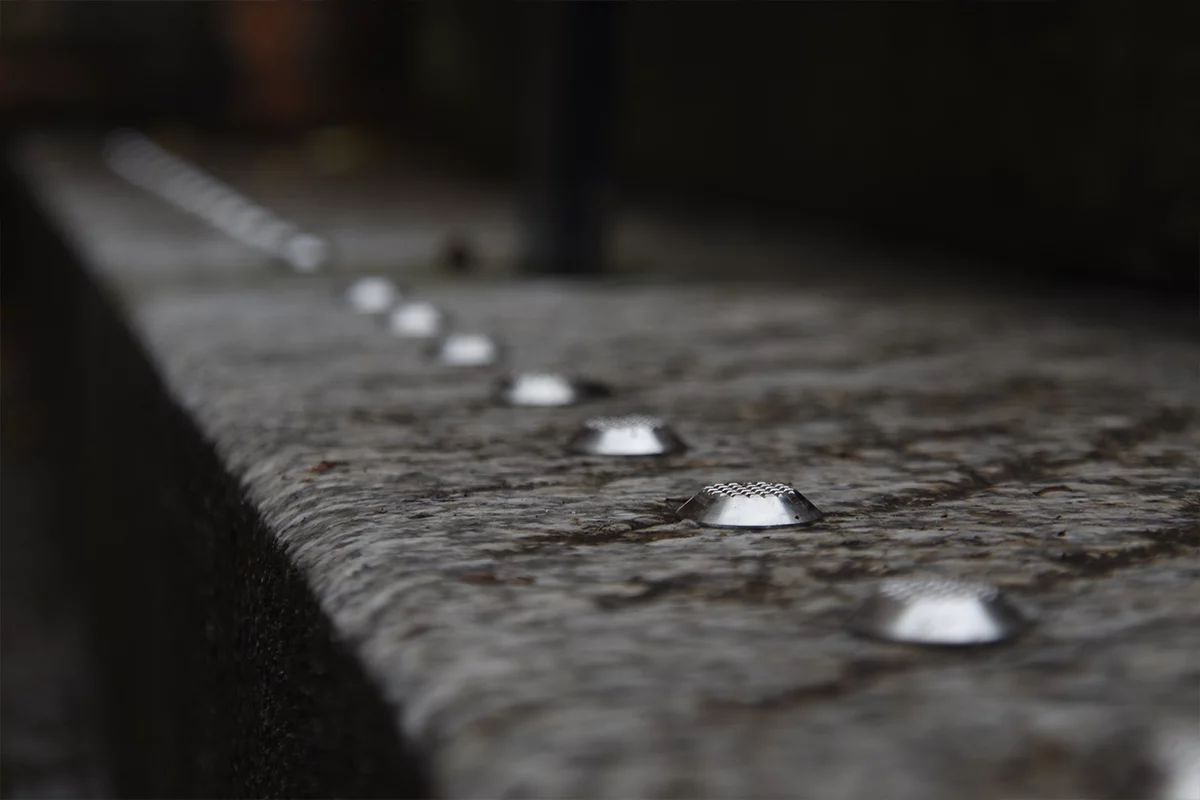
PRODUCTS: 316L stainless steel cross-hatch tactile studs with chamfered edges
DESIGN STANDARD: Project-specific stair safety installation
COMPLIANCE / GOVERNANCE: N/A – tactile stair safety application
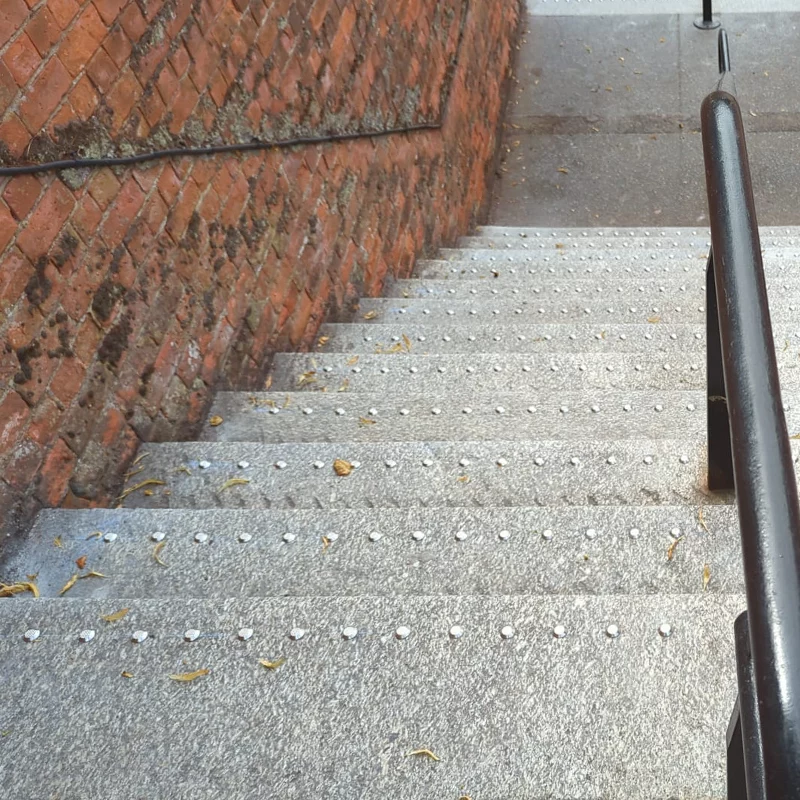
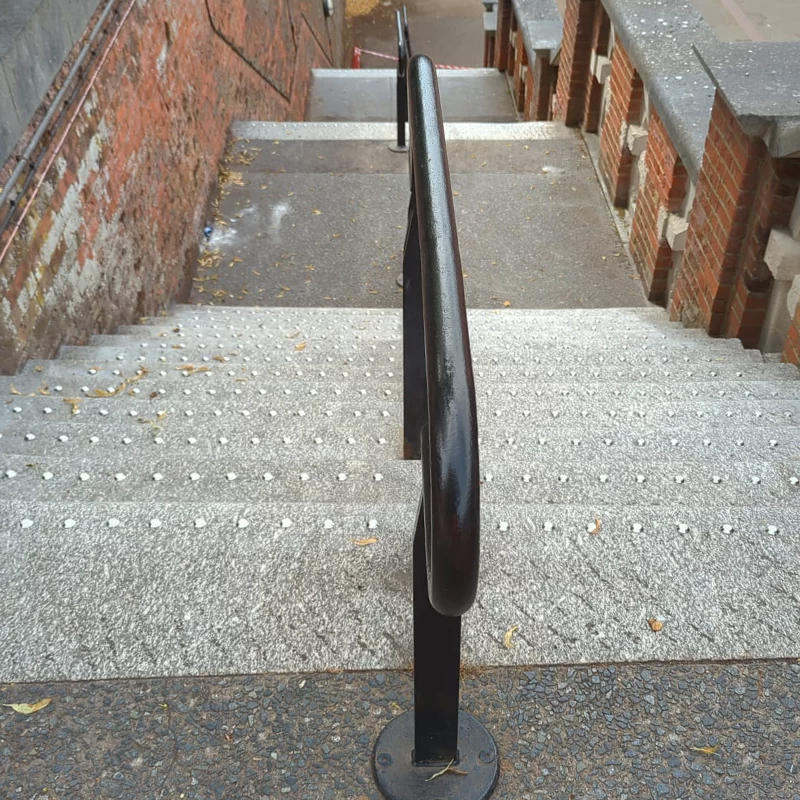
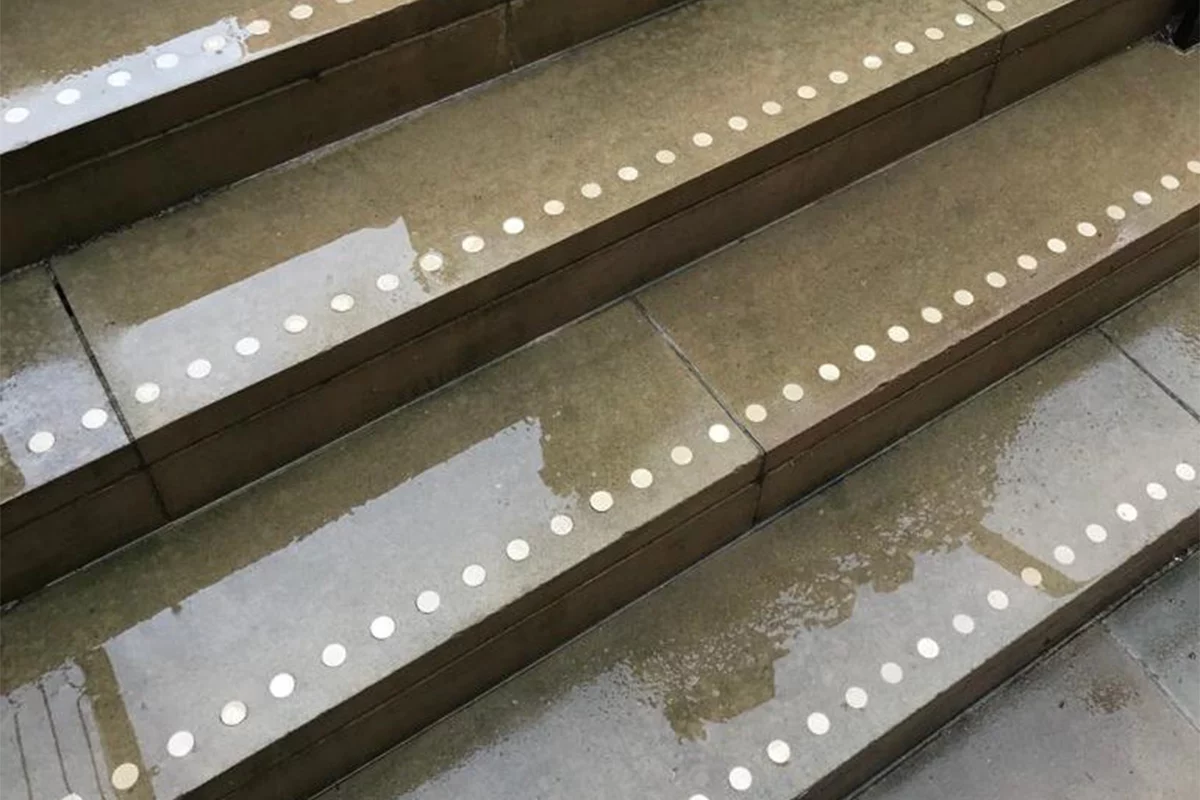
Studmarc supplied 316L stainless steel cross-hatch tactile studs for the historic external granite stairs at the University of Greenwich, addressing repeated slips, trips and falls while preserving the heritage character of the staircase. The patterned studs provide increased underfoot grip and a visual cue to the change in level, with precision installation positioning each stud 68mm from the stair edge.
Project Overview
The University of Greenwich was having issues with multiple reported slips, trips and falls on their external stairs leading up to the main campus building. They required a long lasting solution that could aid stair users in maintaining their grip while overcoming the complication that the granite stairs presented. The stair set itself was installed at the time that the university was originally built and had inherent heritage value to the site. With the granite stairs having been there well over a hundred years, the edge of the steps had worn down unevenly making it unsuitable for stair nosing. As a temporary measure the university had applied anti-slip tape but it had lasted only a few months.
There were also aesthetic concerns as they required the solution to be in keeping with the surrounding aesthetic of the Greenwich University campus.
Product Solution
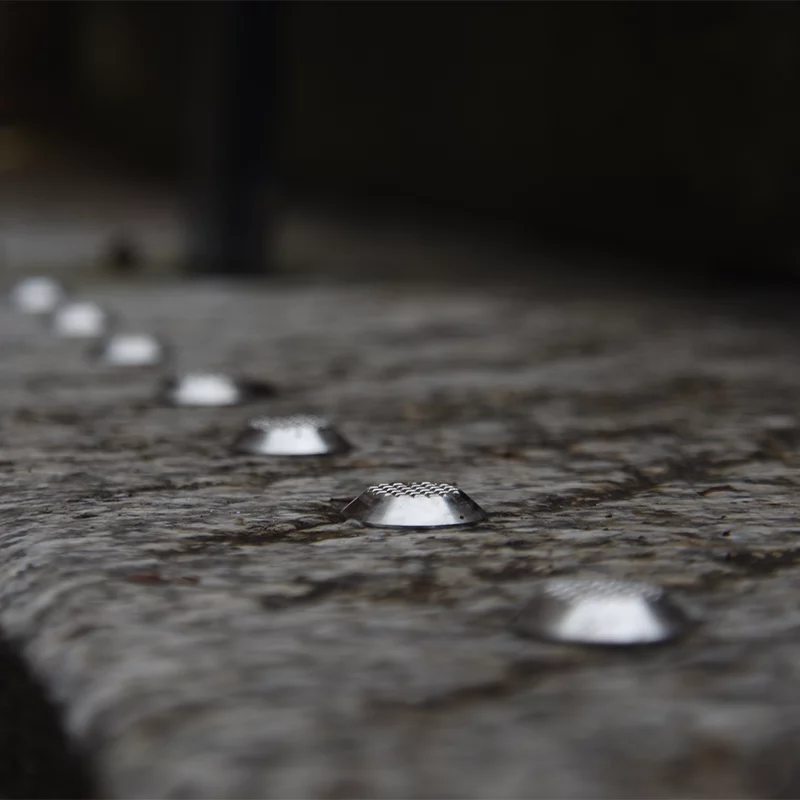
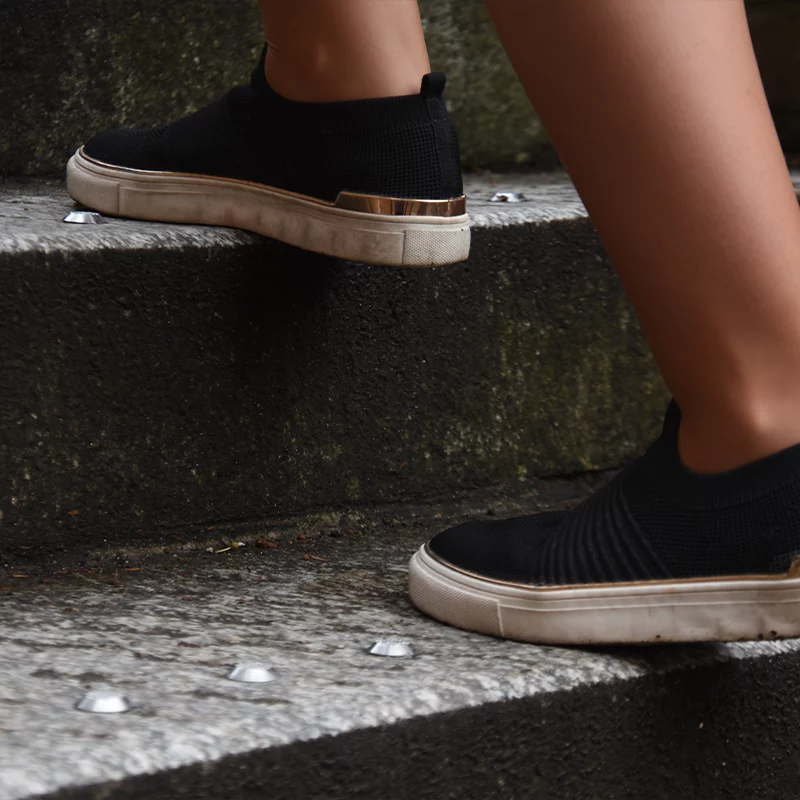
The solution suggested by Studmarc was to install patterned tactile studs with chamfered edges with equal spacing along the steps, to provide adequate grip as well as an anchoring point for the feet of pedestrians. The tactile stud also would also a visual cue to help users determine the level change further preventing slips and falls.
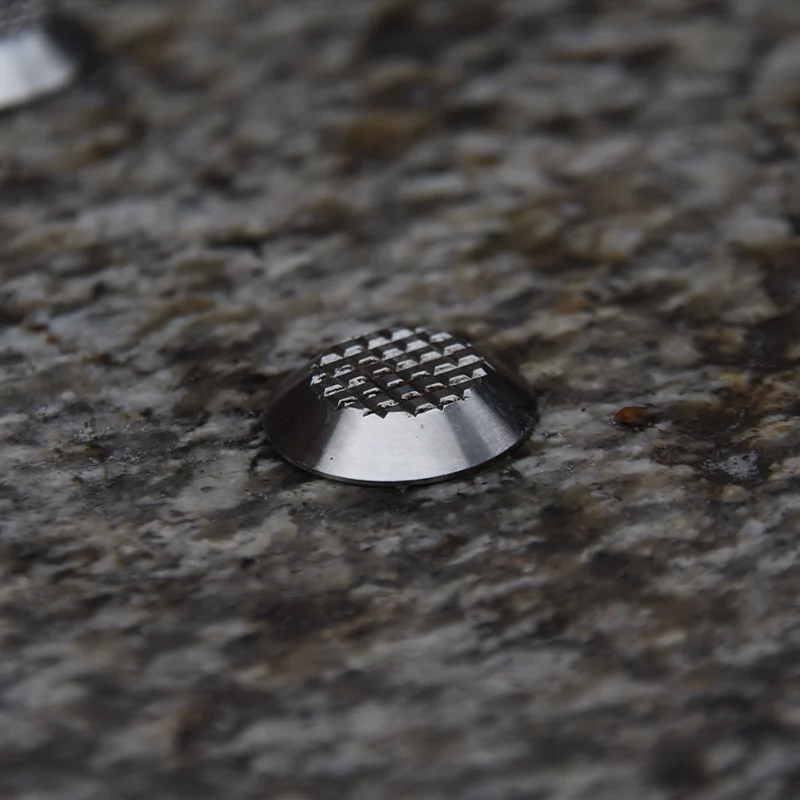
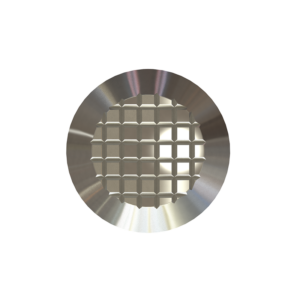
The chosen stud was a cross hatch patterned 316L stainless steel tactile stud, chosen for the quality of the metal and its weather resistant properties, as well as its patterned surface for increased grip under foot.
Installation
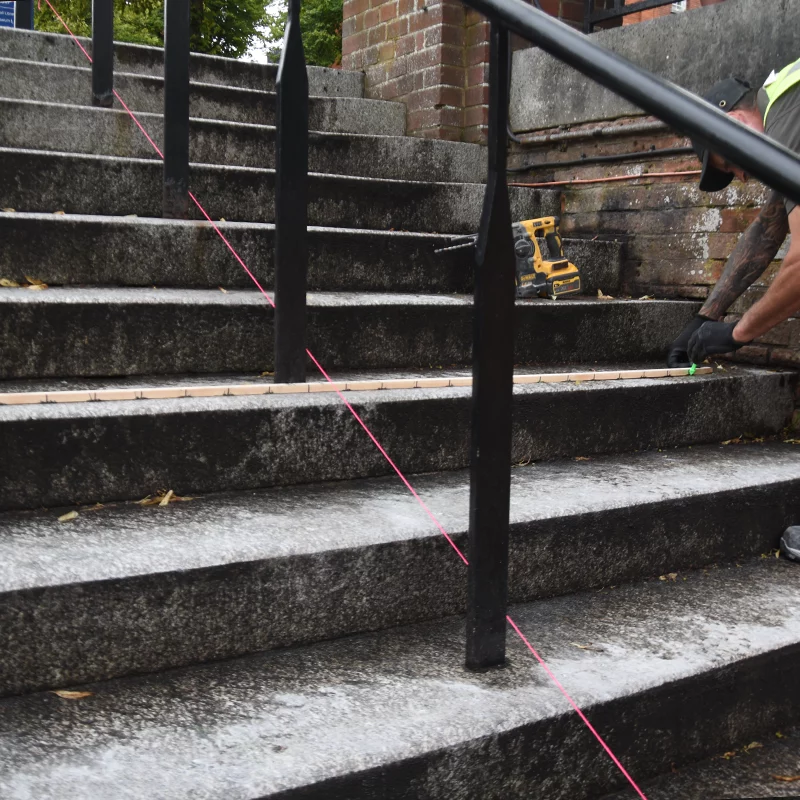
The Studmarc installation team installed the studs with exacting precision, ensuring all studs were installed at 68mm from the edge of the step. This distance ensure that the studs would make contact with the feet of pedestrians and not be stepped over, or alternatively become a slip risk by being too close to the edge of the step.