Why Boundaries Matter in Tactile Guidance Paving
Blog
The importance of boundaries
Tactile guidance paths can be a vital element for navigation for members of the visually impaired community. They help provide information about an obstacle free route that the individual can follow to a set destination or to a commonly trafficked point. These routes can sometimes include attentionpoints where an action is needed to progress, a junction with multiple options of destination, or simply an attention point that notifies the users of the end to the route.
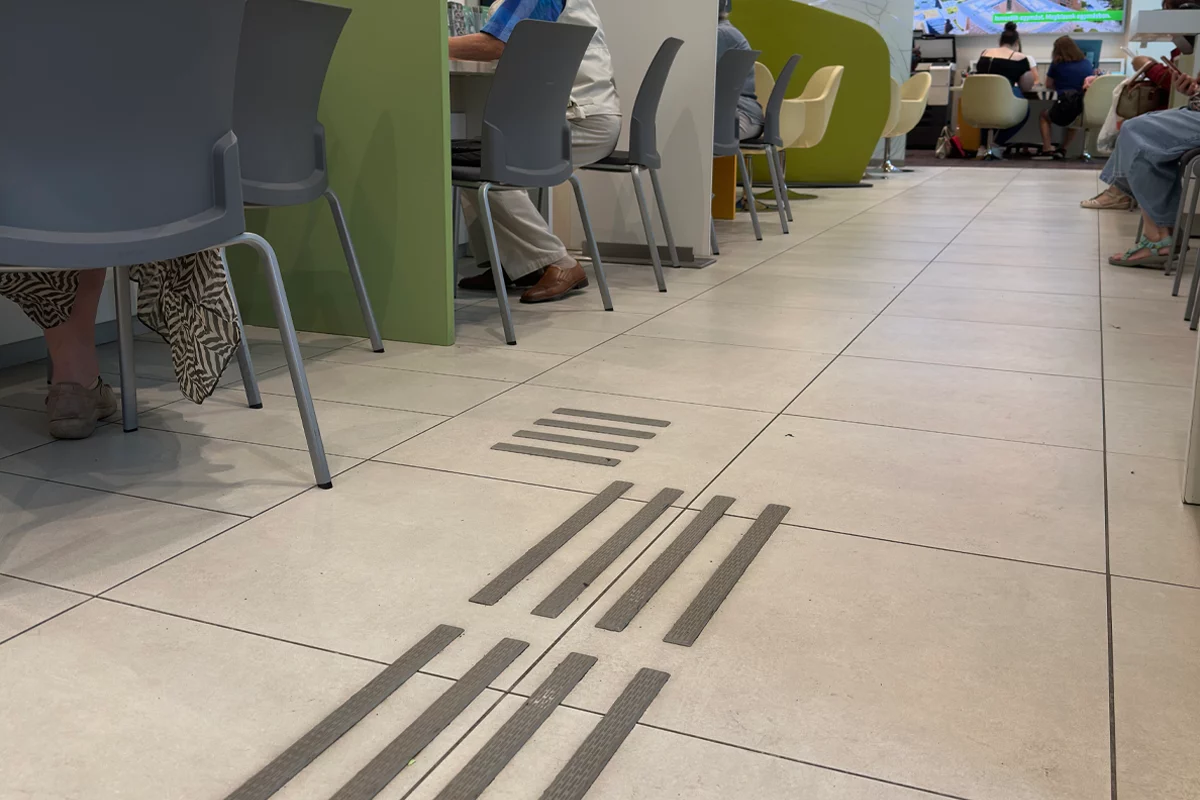
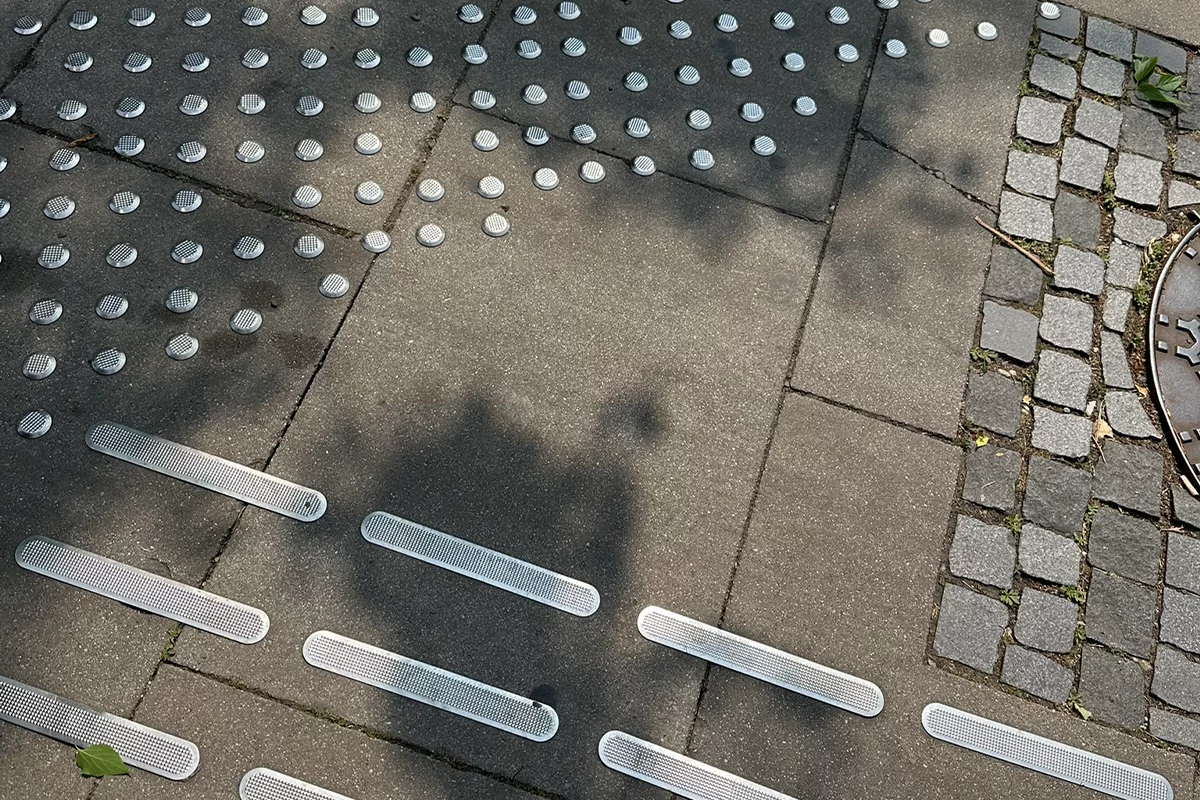
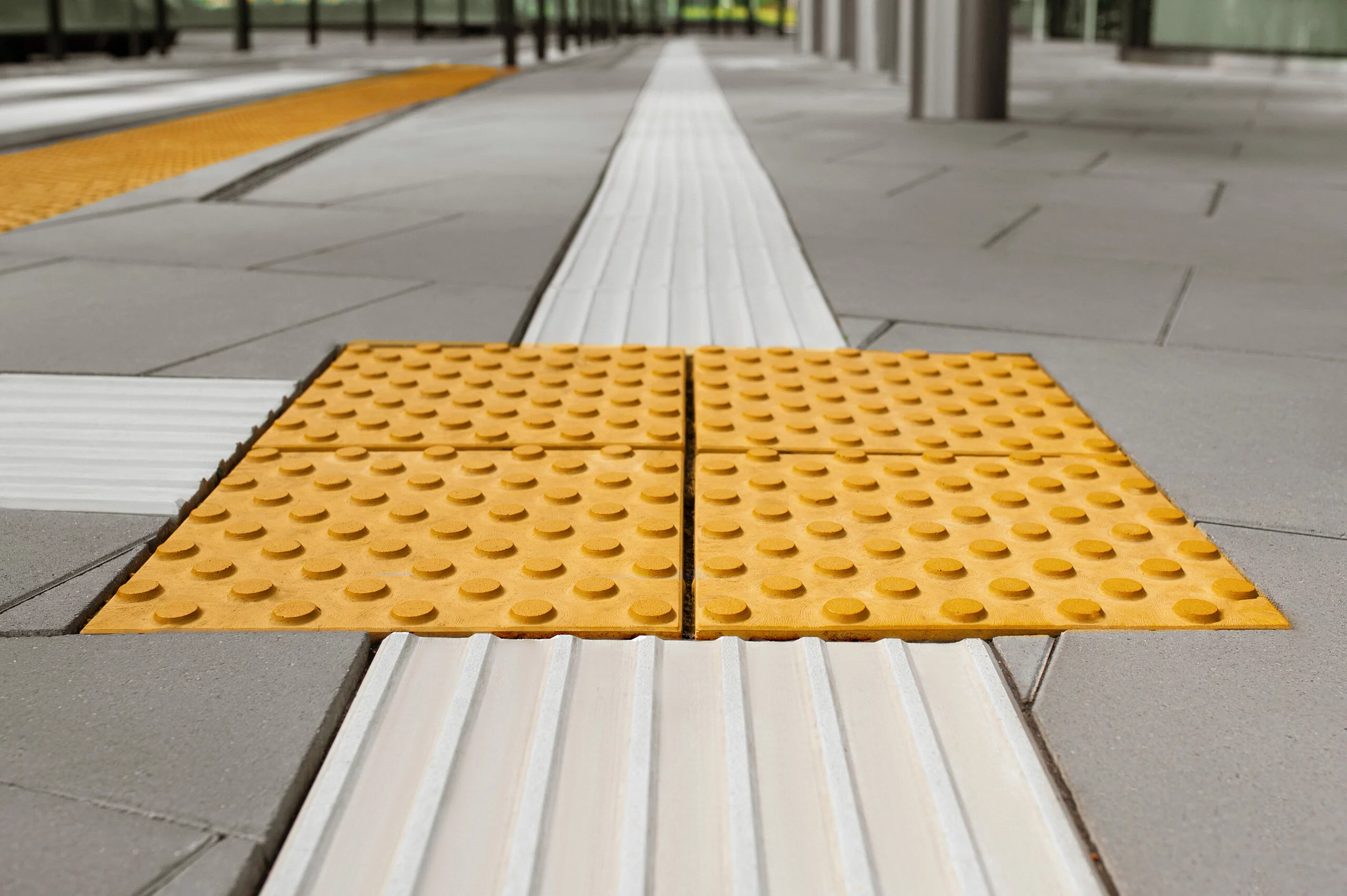
There are multiple sets of guidance available on how to layout tactile guidance paving but between them there is the common tactile guidance tile that features 5 bars running parallel. In its most basic form these tiles are joined together to form a path that runs in two directions. The path can be oriented in multiple different ways by using cuts to the tiles or tactile strips, this helps users navigate around bends or in a more direct route to a destination.
Which all sounds great until temporary obstacles or disruptions to the tactile guidance paths are encountered.
Respecting boundaries
Tactile guidance paths are a significant commitment of space in the public realm as they can take up a sizeable area for their implementation. The reason for this is due to the width of the tiles themselves being 800mm or 400mm wide, depending on the guidance followed, in combination with 800mm clearance needed on either side of the route. In total this means a tactile guidance path requires a minimum of 2000mm of space to be applied.
This can be particularly challenging for those planning the routes in mixed use locations and areas that see a lot of foot traffic. The planning of the tactile route must consider things like the prevalent flow of foot traffic, boundary walls, as well as any fixed obstacles.
A primary concern is the 800mm clearance on either side of the path, this is vital for the safety of those that will come to rely on the tactile guidance path to navigate the public space. That tactile guidance path should come with the guarantee of 800mm uninterrupted space on either side of the path and provide the visually impaired user with the confidence to continue along that route.
When tactile guidance paths are obscured by obstacles or their clearance boundaries aren’t respected, they’re actively more of a danger than an aid. In fact, it’s much safer for a visually impaired pedestrian if there’s no tactile guidance paving as they will proceed with the same level of caution they normally would without being lured into a false sense of security.
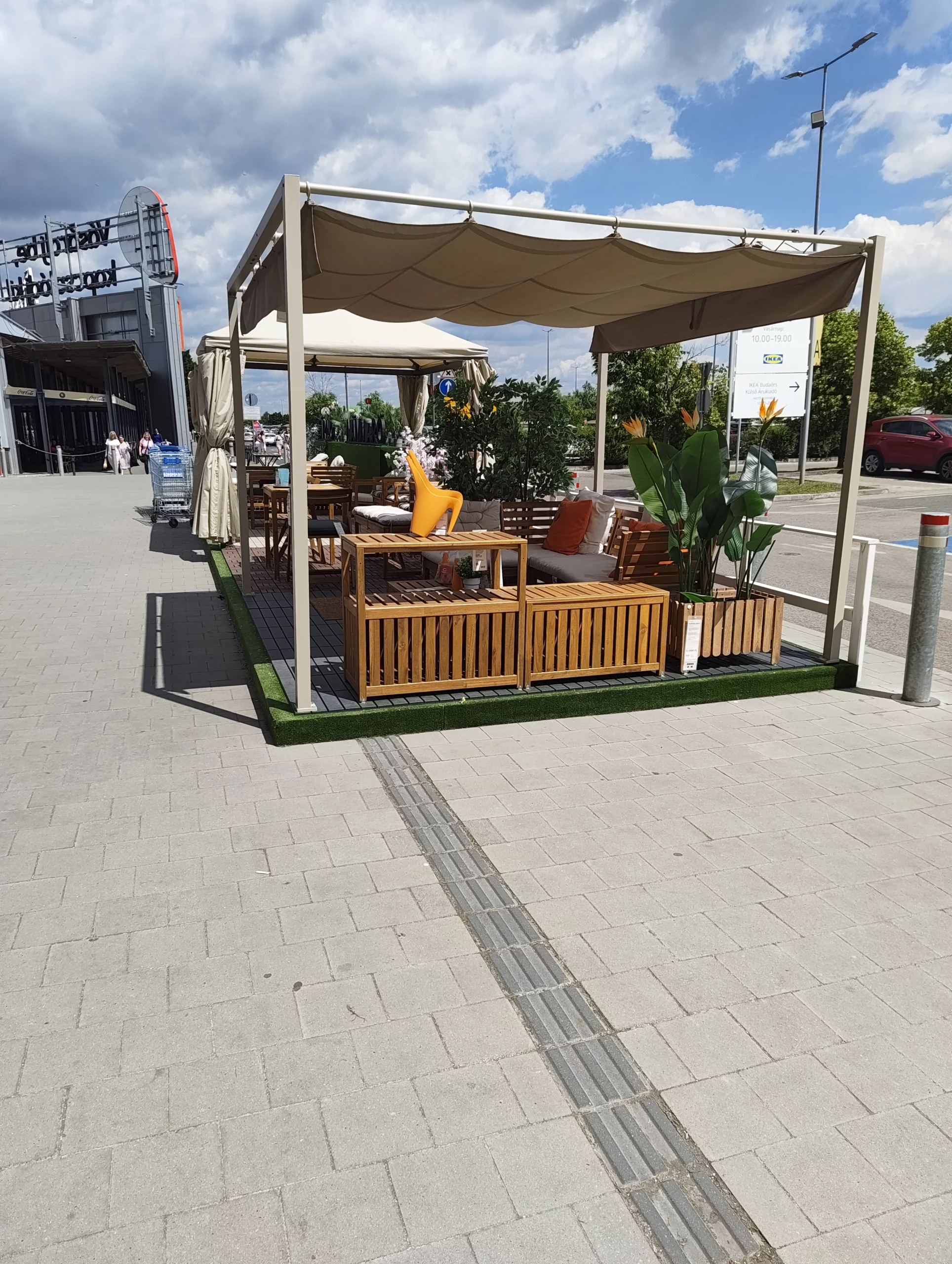
It’s unfortunately common that where these paths are installed, particularly outside businesses, inside shopping centres or in other public places that are owned and managed by a third party, that these boundaries aren’t properly respected. This isn’t through malintent; it’s more a lack of understanding of tactile guidance paths and local businesses not being included as stakeholders at the design stage.
What kind of obstacles are commonly found on tactile guidance paths?
The obstacles can be things like chairs from a cafe, mobile signage, external shop displays, bins, or other mobile features. Again, all innocuous items to anyone that doesn’t understand tactile guidance paving or what it’s there to do.
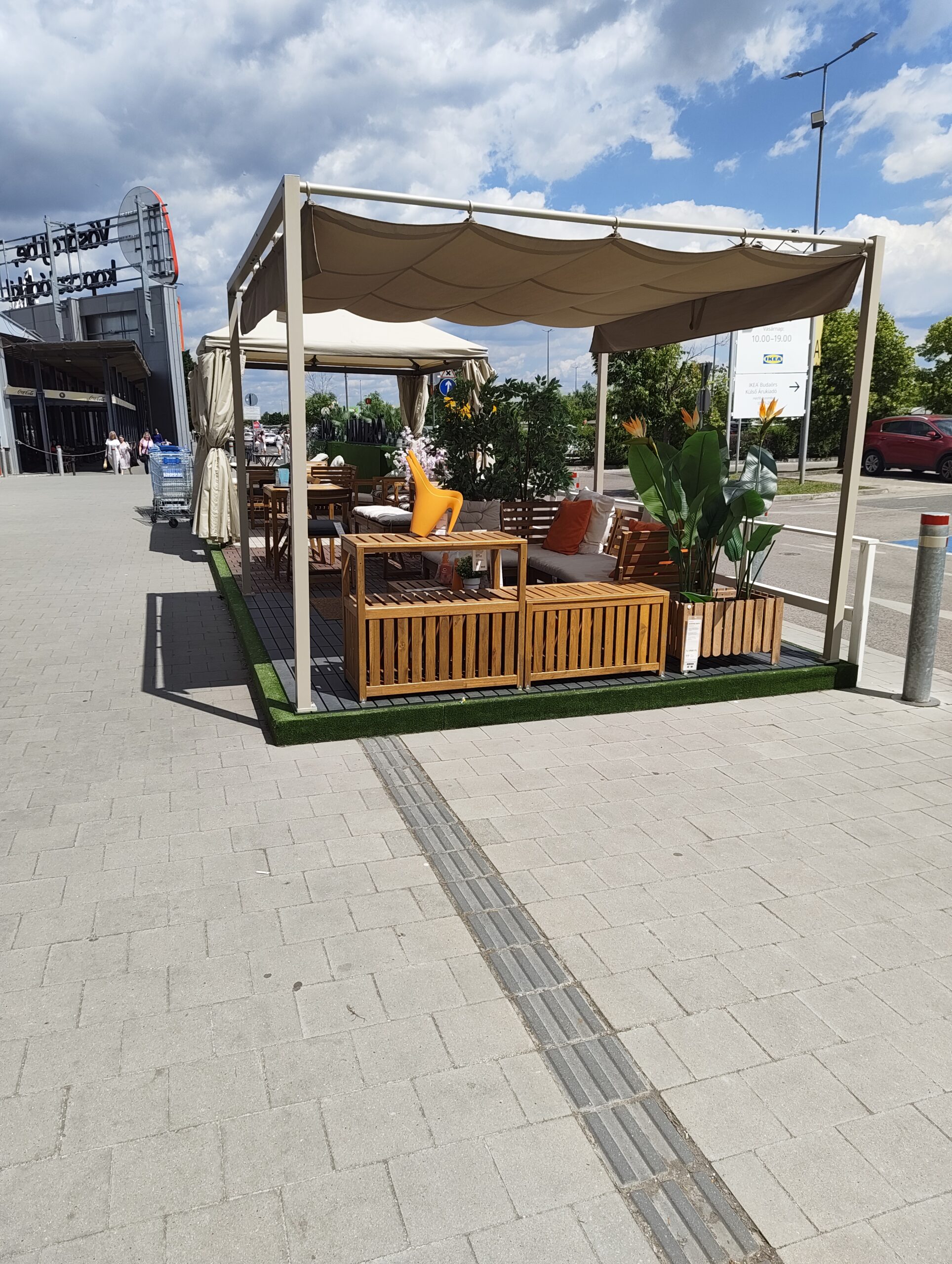
What is the impact of these obstacles on the tactile guidance path?
Not every individual with a visual impairment shares the same level of sight impairment or are even impaired in the same way. The level and type of residual vision can be very much unique to that individual, and due to this variety the visually impaired commute in different ways with different forms of assistance. This could be by using a cane, guide dog, sighted guide or they may not need additional assistance at all.
The obstacles will present a different challenge and level of danger to different visually impaired pedestrians. They form a potential trip hazard that could harm some, and to others they force them to leave the tactile guidance path to then have to navigate around the obstacle, wasting time and expendingunnecessary mental and physical energy.
The other unseen impact is that it introduces doubt into the mind of the visually impaired pedestrian forcing them to be more careful and cautious on what should be a safe route to a destination. This slows them down and adds to the mental load when navigating.
How do we solve this problem?
The root cause of the issue is almost entirely down to knowledge of tactile ground indicators and what they signal. There’s no malice of forethought behind the blocking of tactile guidance paths, it’s simply that people just don’t know what they’re there for.
The vast majority of people will navigate through their lives, at least the early part of it, with no need to concern themselves with what the signals on the ground mean, what that spinning thing is under the traffic light signal box, or what the bumps are on lift signage. That’s because they themselves or their immediate family haven’t been touched by visual impairments and that’s something to be thankful for.
Good fortune aside, it is important for everyone to understand what tools and signals are installed into the built landscape to aid the visually impaired and how we can unknowingly affect their effectiveness. This can be through leaving an obstacle such as shop signage on top of the tactile guidance paving, or by stopping on top of guidance paving while it is in use.
Being realistic, not everyone can be reached with this information without it being taught to people at a young age through school programs, and introducing something like that into education is a difficult thing to do.
Outside of that larger ambition there are things we can do more locally:
- Engage in more conversations around accessibility and tactile guidance
- Architects and contractors can create stakeholder groups when planning tactiles to get buy in from those in local area
- Introduce signage in areas where tactile guidance paving is used to inform visitors and pedestrians of the importance of keeping them clear of obstructions
Tactile guidance paving only fulfils its purpose when its boundaries are understood and respected. Without clear, obstacle-free space, these paths can quickly shift from being a tool of independence to a source of risk and uncertainty for visually impaired pedestrians. By improving awareness, involving local stakeholders, and designing public spaces with long-term accessibility in mind, we can ensure tactile guidance paths remain reliable, safe, and effective. Respecting these boundaries isn’t just good design practice it’s a shared responsibility that directly impacts how confidently people with visual impairments can move through the built environment.